The Story of Becoming a Triathlete and IRONMAN 70.3 Finisher
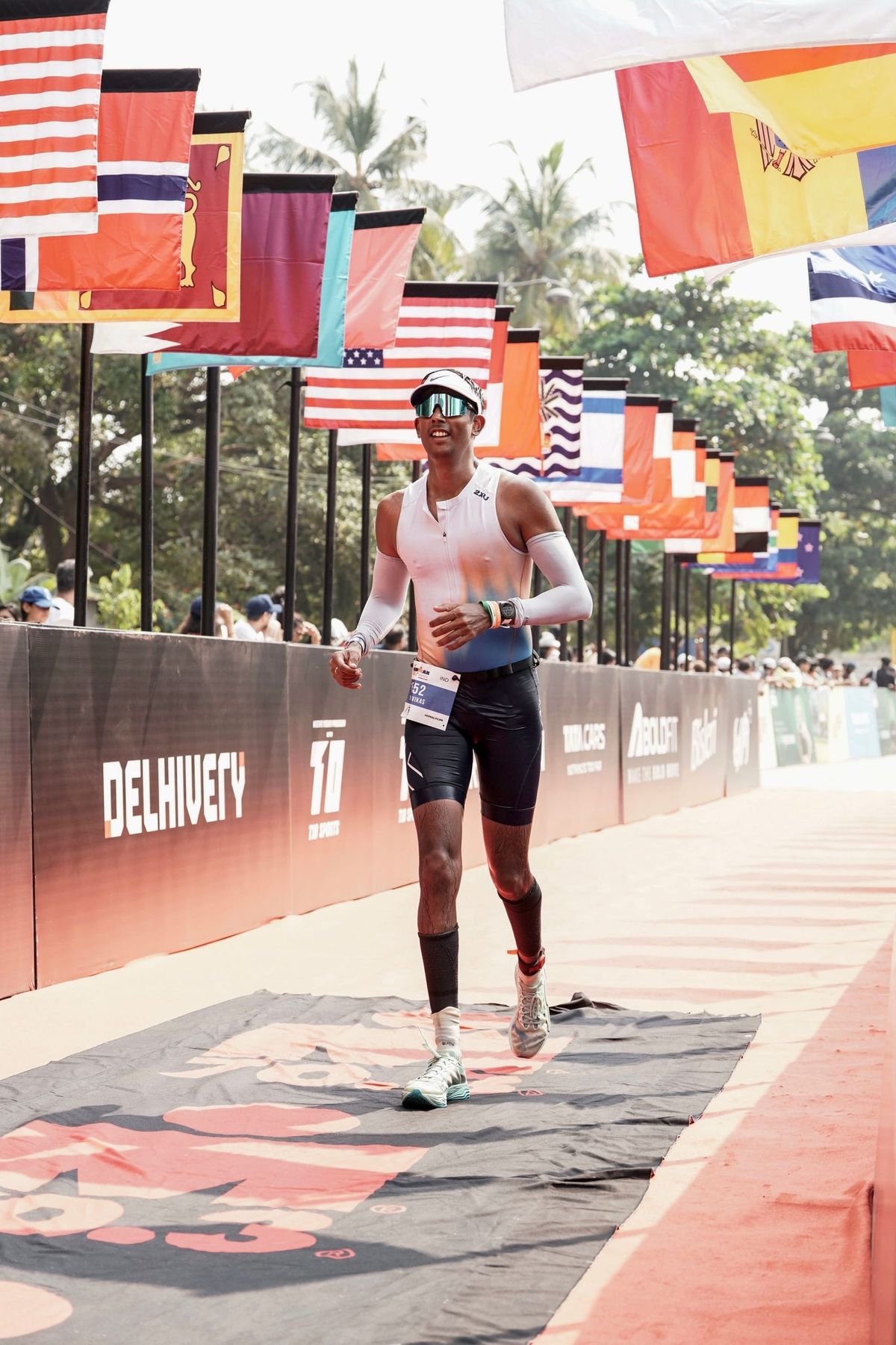
"You are an IRONMAN 70.3 finisher."
For the last seven months, I worked toward hearing those words at the finish line.
Chapter 1: The Why and the preparation for the race
The seed of wanting to do an IRONMAN was planted in 2021, when I watched thedocumentary on the IRONMAN World Championship in Kona. But it was not until 2026 that I felt most of what I needed for an IRONMAN 70.3 was in place: the willingness to invest the time, money and effort, and a base level of fitness that gave me confidence I could train for it and finish it.
I had completed the TMM full marathon in a good time in January 2026, after a rough 2025 with running injuries, so my running form was in good shape before the preparation began.
I also had a competitive swimming background, so I knew I could train for the distance within six to seven months.
Cycling was new to me, and it was probably what kept me from taking up triathlon earlier. It is an expensive sport. It takes time to find good training routes, especially in a city like Mumbai, or it means buying a home trainer, which adds to the cost. In April 2026, I felt ready to take the plunge and bought the bike for the race. My family and friends still don't believe road bicycles cost this much.
I began the training block in April without a daily plan, since I had to train around work and other commitments, but I always set a weekly goal. The focus was on getting comfortable cycling long distances and adjusting my swimming form and pace for the longer distance.
Training for an IRONMAN 70.3 means fitting in two workouts on most days, and sometimes three on weekends: swim, bike, run, strength and mobility, supported by enough sleep and a good diet for recovery. The only way to fit it all in was to wake up early.
Getting up at 4-5 am, and training for 1-2 hours on weekdays and 3-4 hours on weekends, became routine. It was hard at times, but it turned into a lifestyle, and I fell in love with it.
They say an IRONMAN journey transforms you, and it did. I fell in love with the process.
Over the seven-month block, I trained about 52 km of swimming, 700 km of running and 900 km of cycling, along with many hours of strength and mobility work. My cycling volume fell short of what I wanted. It wasn't always easy to wake up at 4-5 am and travel to a place where I could ride long distances without worrying about traffic. A home trainer would have helped, but after the cost of preparation and registration, I deferred that purchase.
Chapter 2: The race experience
Leg 1: The swim was a war zone
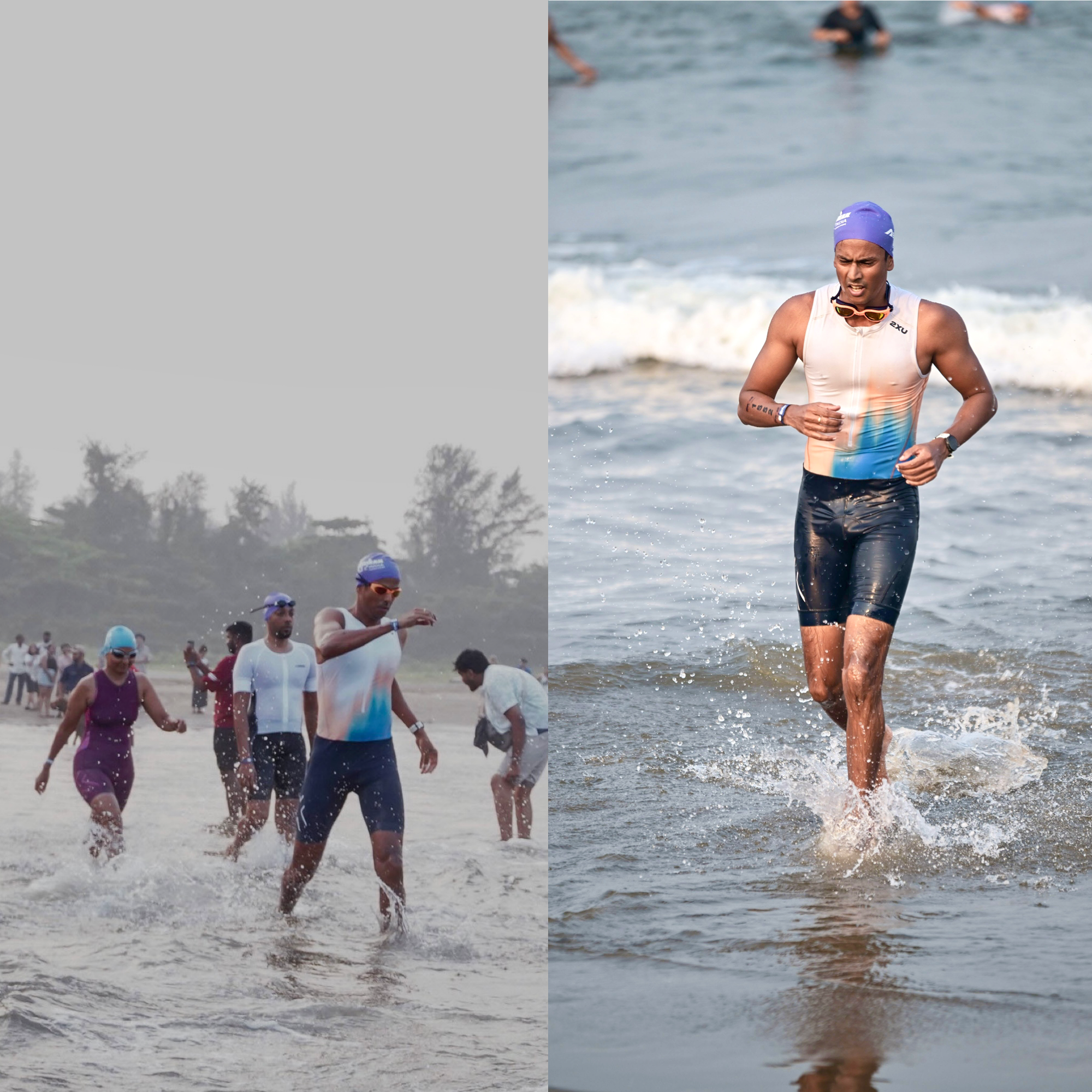
Swimming is my strength, so I should have started from the front pack with an orange cap.
I chose the purple cap, thinking everyone would seed themselves by pace, but that was not the case. Starting in the second pack, I had to navigate through many people and got kicked and pulled for the first 500 metres as I tried to find a clear path at my own pace.
Around 600-700 metres, I felt tentacles drag across the back of my hand. It was the dreaded jellyfish. A sudden pain shot through my hand, but I had been stung once in practice, so I was able to accept it mentally and move on quickly. Many athletes were stung, so I was lucky to be stung only once, with manageable pain.
As our swim coach said,"When you go to war, you are bound to get wounds."
After 800 metres, I found my rhythm, paced myself consistently and finished the swim in 40:56, slightly slower than I expected. With what I learned, I think I can target a 35-minute swim with better seeding, a pacing strategy and more training before the next race.
Leg 2: The bike was about reading the conditions and playing the right cards
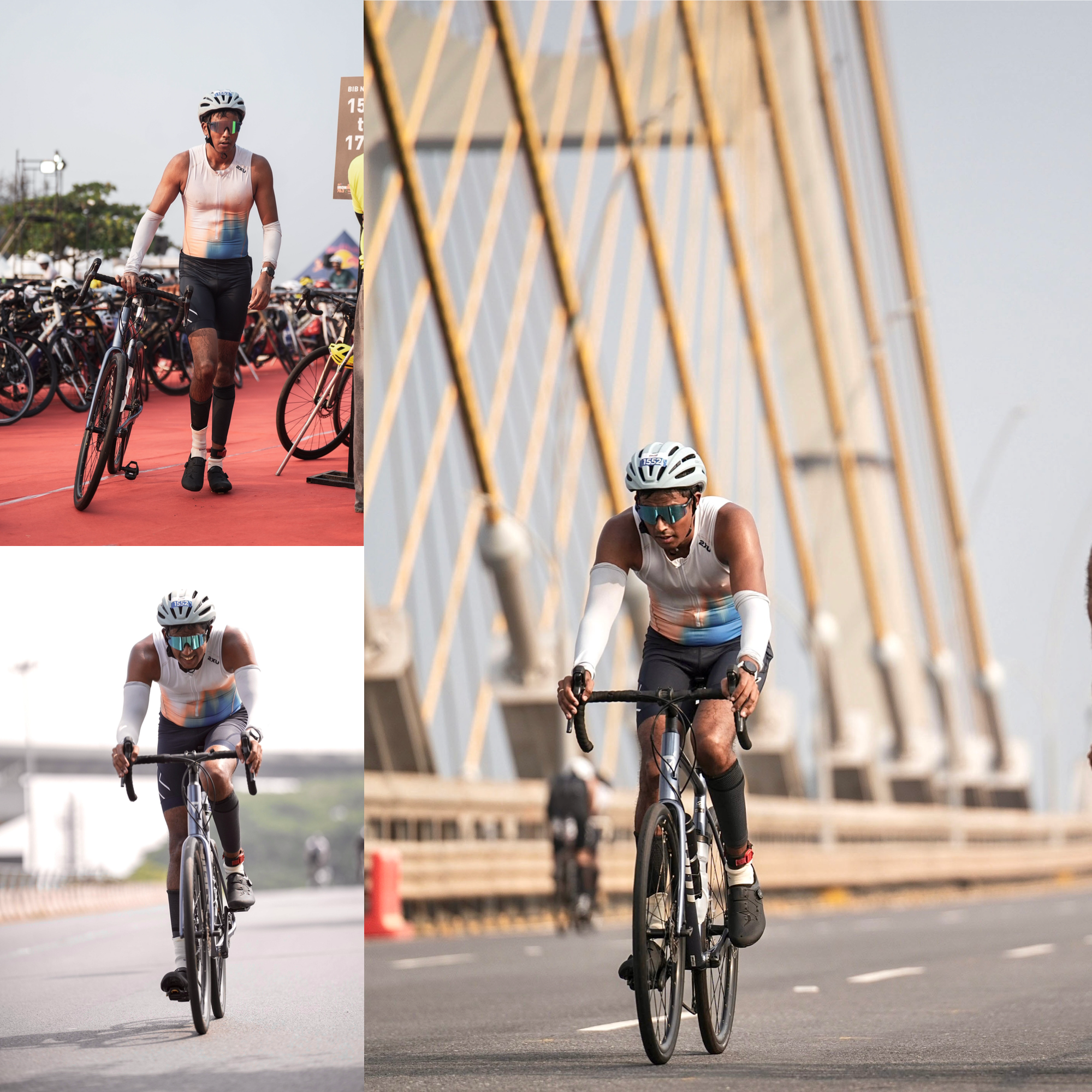
Moving from the swim to the bike, I took more than 10 minutes in transition, which is long in any conditions. Part of it was inexperience. Part of it was that the jellyfish sting had left my fingers slightly numb, so getting into my bike gear took longer than it should have.
I was nervous about the bike leg. It is the longest leg, usually more than half of the total race time, and I had less experience cycling than in the other two sports.
I started at a moderate pace to gauge my energy and the conditions. Between 5 and 20 km, I felt good and picked up the pace. After that, conditions got tougher by the minute: the heat and humidity climbed as the clock passed 9 am, and the long elevations on the route made it harder.
Cycling is the most strategic leg of a long-distance triathlon, not only because it is the longest, but because you still have to run afterwards. You need to conserve energy and protect your legs for the miles ahead. Managing effort and fuelling according to the conditions is the key to the whole race.
I wasn't riding the most aerodynamic bike in the race. I would have loved carbon wheels and a carbon frame, but that would have meant lakhs in upgrades. Still, I was comfortable with my setup for the most part.
I knew I had the endurance for a good effort if I managed my pacing and nutrition well. I took gels, electrolytes and water every 15-20 minutes so I never ran low on fuel and would have energy left for the run. My pacing was good: I didn't push hard on the climbs, which would have burned too much energy and risked burnout, and on the flats and downhills I rode slightly below maximum.
I finished the bike leg in 3 hours 27 minutes, a solid effort in those conditions. The bike is where I expect to gain the most with more experience and training, and I will target a near 3-hour finish in my next 70.3.
Leg 3: The run tested the deepest depths within me to find the finish
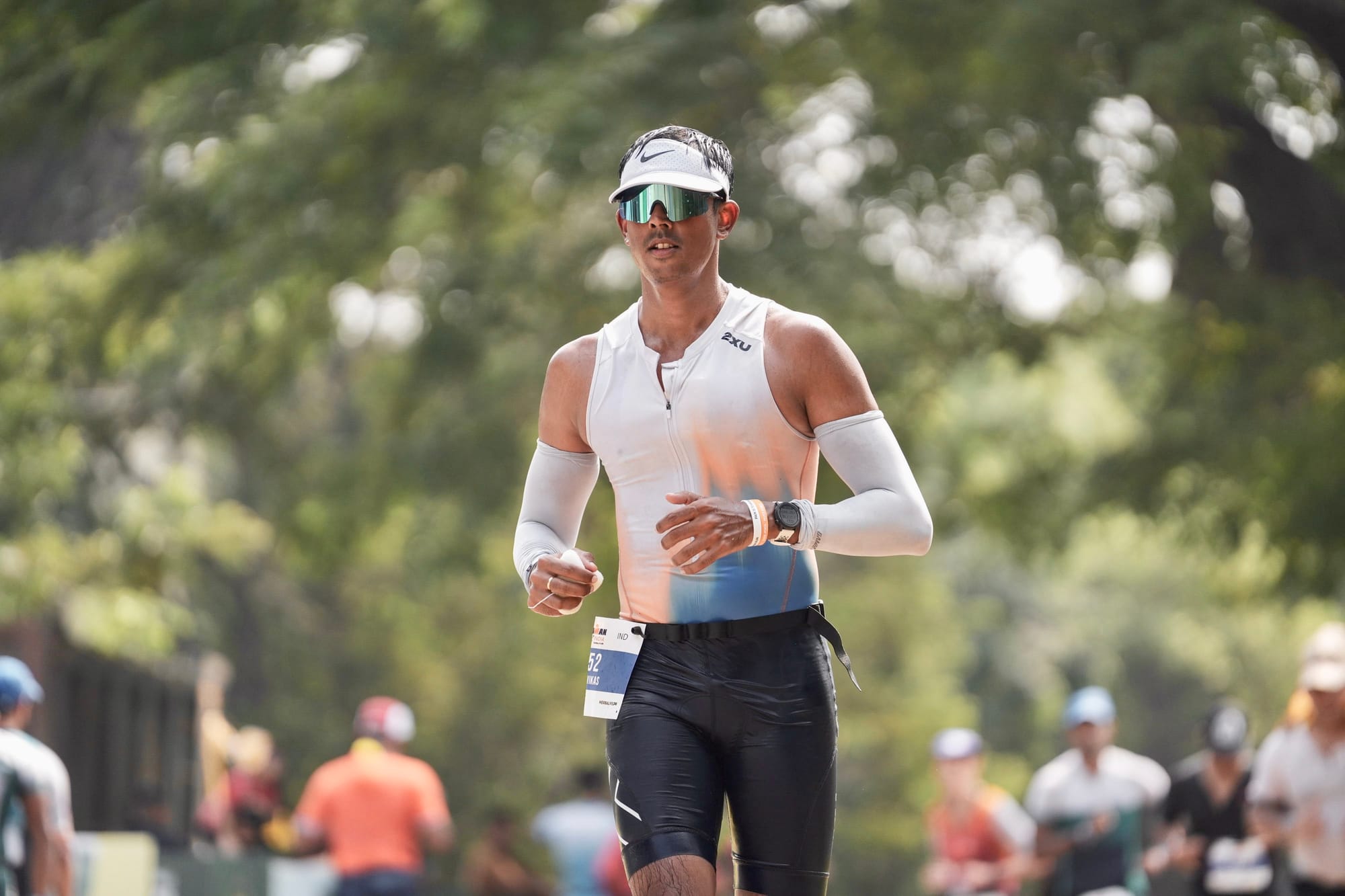
The transition from bike to run was smoother than from swim to bike: 5 minutes 16 seconds to get into my running gear.
I started the run faster than planned. Seeing my wife at the transition line and hearing the crowd gave me a burst of energy, and the first kilometre was the fastest of the whole run.
The right strategy is to start slow, check how your body feels, adjust, and then finish fast.
In the second kilometre, I realised I was making a mistake and would probably blow up in the heat if I kept that pace. I gradually slowed to a pace I thought I could hold for another 20 kilometres.
I started the run at around 11:30 am, and with every kilometre the sun climbed higher, bringing more heat and humidity. There were also three long climbs on the route.
By kilometre three, I knew it would take an extraordinary effort to run the whole distance. I had to keep my body cool and use the aid stations, every 2-3 kilometres, well. I drank cold water at every station, took an orange and a banana when I could no longer take gels, and kept squeezing a cold sponge over myself to keep my body temperature down.
It worked: I held the pace until kilometre 19. Through those kilometres, I went through many emotions, doubts and the fear of not finishing. I tried to keep my mind as quiet as I could, because deep down I knew I had prepared harder than for anything before, and that finishing was possible.
At 19 km, I started to feel emotional, realising how many months of effort had brought me to this point. In the last two kilometres, I picked up the pace to finish strong: smiling, emotional, elated, calm, present and alive in the moment.
I crossed the finish line in 6 hours 49 minutes, and the announcer called out over the mic, "Chetan Vikas Tidke, you are an IRONMAN 70.3 finisher."
That is how I came closer to a dream I had visualised five years before I reached the IRONMAN 70.3 Goa 2026 finish line.
Chapter 3: The learnings and what's next
During the training block, I lost 7 kgs in weight, mostly fat and some muscle; gained a lot of endurance, technical capability, strength, and flexibility.
In the process, I revived my love for swimming, got introduced to cycling, and got better at running.
I am only getting started on the triathlon journey, and I am excited to see how much I can improve in the sport.
I could not have done this alone. Thank you to my family and friends for their support.
The bigger dream is to hear the words "You are an IRONMAN" and complete the full- distance race. Before I take that on, I will race a couple more IRONMAN 70.3 events in 2027.


